Six works that trace Vanessa Bell’s fearless reinvention of modern art
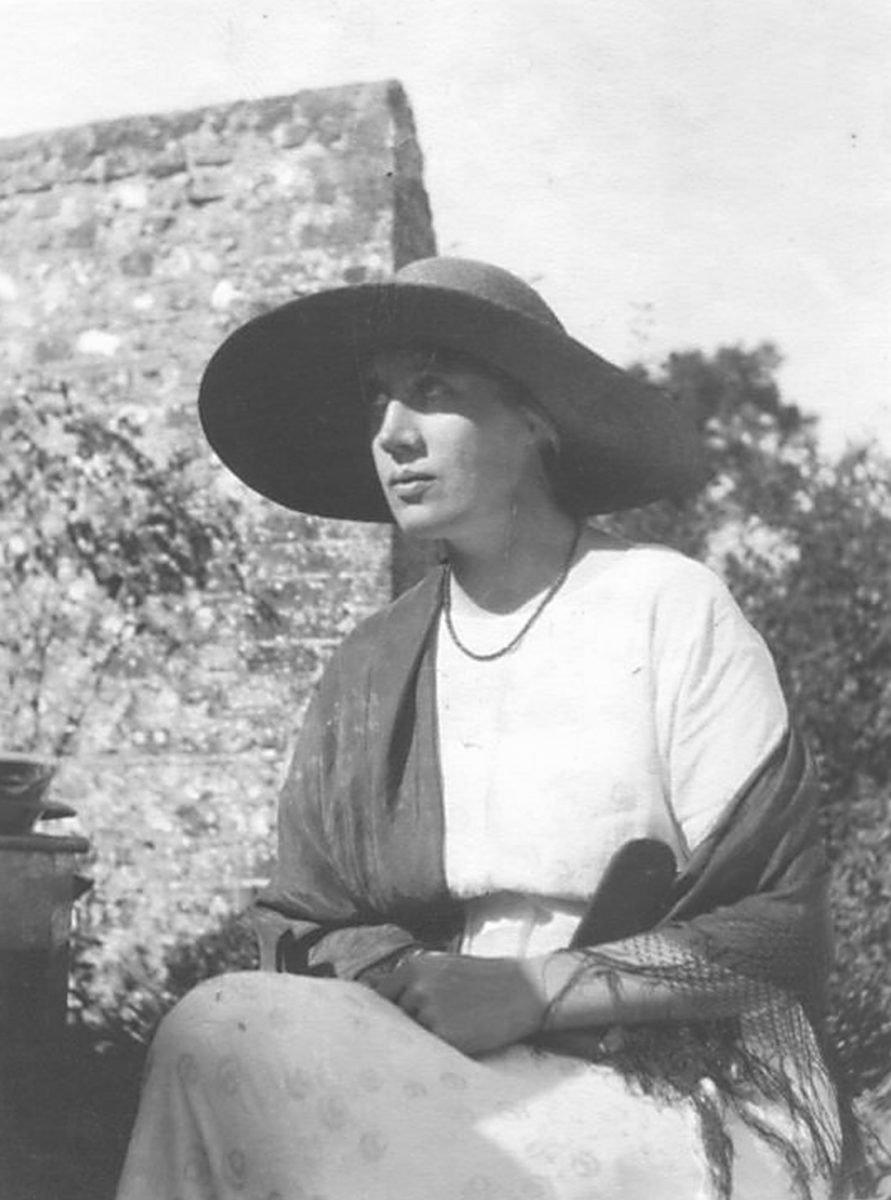
Artist Vanessa Bell absorbed the shock of post‑impressionism, the bold experiments of European abstraction and the energy of modern design and transformed them into something entirely her own.
Our latest exhibition at Charleston in Lewes, ‘Vanessa Bell: A World of Form and Colour’, offers a rare chance to explore the full breadth of her creativity – right in the heart of Lewes, on view until 21 September.
Bell absorbed the shock of post‑impressionism, the bold experiments of European abstraction and the energy of modern design, transforming them into something entirely her own.
Her work moves from intimate domestic scenes to radical colour studies and beyond the canvas into textiles and interiors. Here are six works from the exhibition that reveal just how much of a modernist pioneer she was.
-
-
Iris Tree (1915)
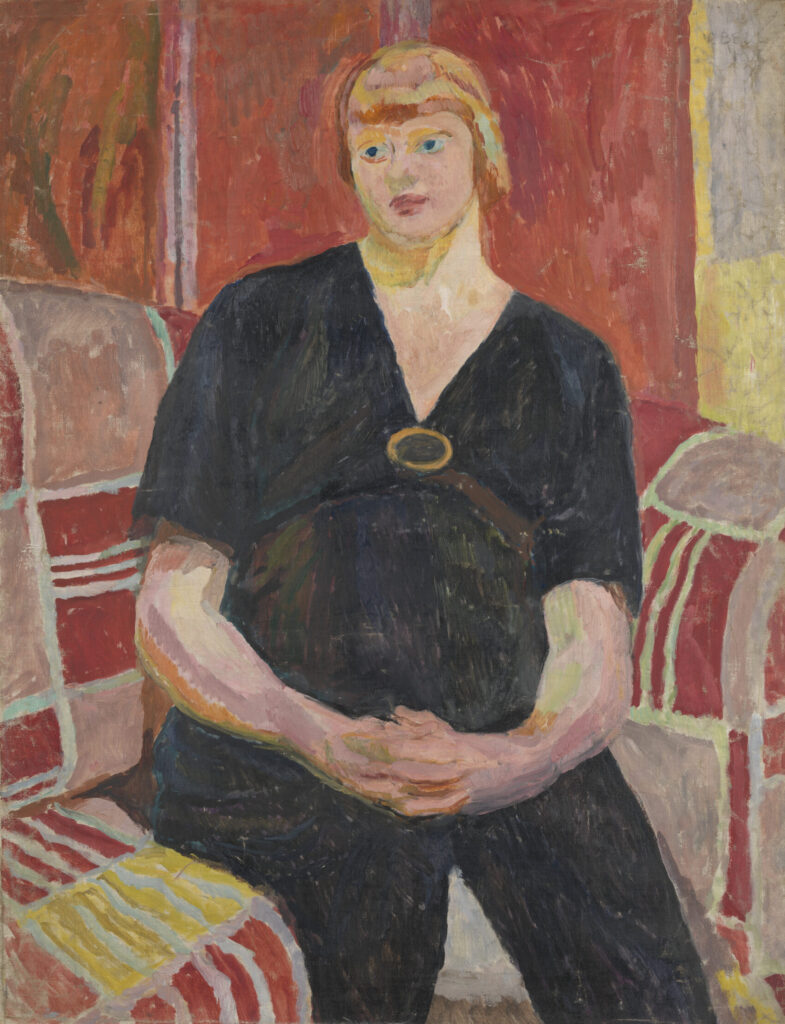
Vanessa Bell, Iris Tree, 1915, lent from a Private Collection 2000.© Estate of Vanessa Bell. All rights reserved, DACS 2024
At first glance, this could look like a straightforward portrait, but look closer and you can see Bell is playing with colour in daring ways – shadows painted chrome yellow, a patterned sofa and a red screen flattened into blocks. The sitter, Iris Tree, was a poet and model and was part of the same restless circle of friends. Her cropped hair and stark black dress echo the pared‑back forms and bold patterning that place this work firmly within the language of early modernism. Bell captures her with a mix of realism and bold design that feels striking even today.
-
-
-
Street Corner Conversation (c.1913)
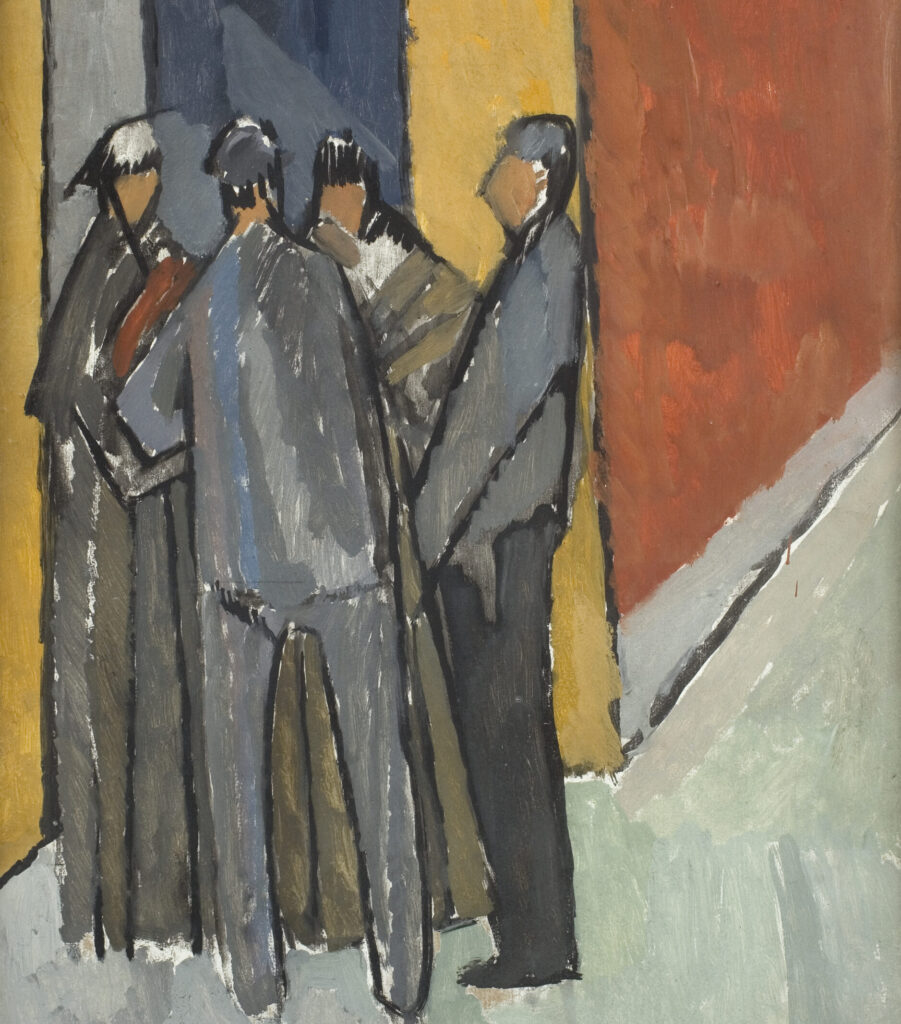
Vanessa Bell, Street Corner Conversation, private collection, photograph © Colin Mills
Small groups of people engaged in conversation are a recurring theme in Bell’s art, recognisable Bloomsbury figures and friends are often depicted seated indoors or in a garden or landscapes. Here, Bell presents a more anonymous, urban group of grey geometric figures. The viewer excluded from the conversation, Bell reduces them to blocks of tone and simplified forms. Their faces are blank, their clothes simple shapes of grey, the street built from soft slabs of colour. Around this time Bell was working with the Omega Workshops, where artists explored how everyday life could inspire new forms of design and art. You can sense that influence here – ordinary people, seen in a new abstracted way.
-
-
-
Abstract (A test for Chrome Yellow) (c.1914)
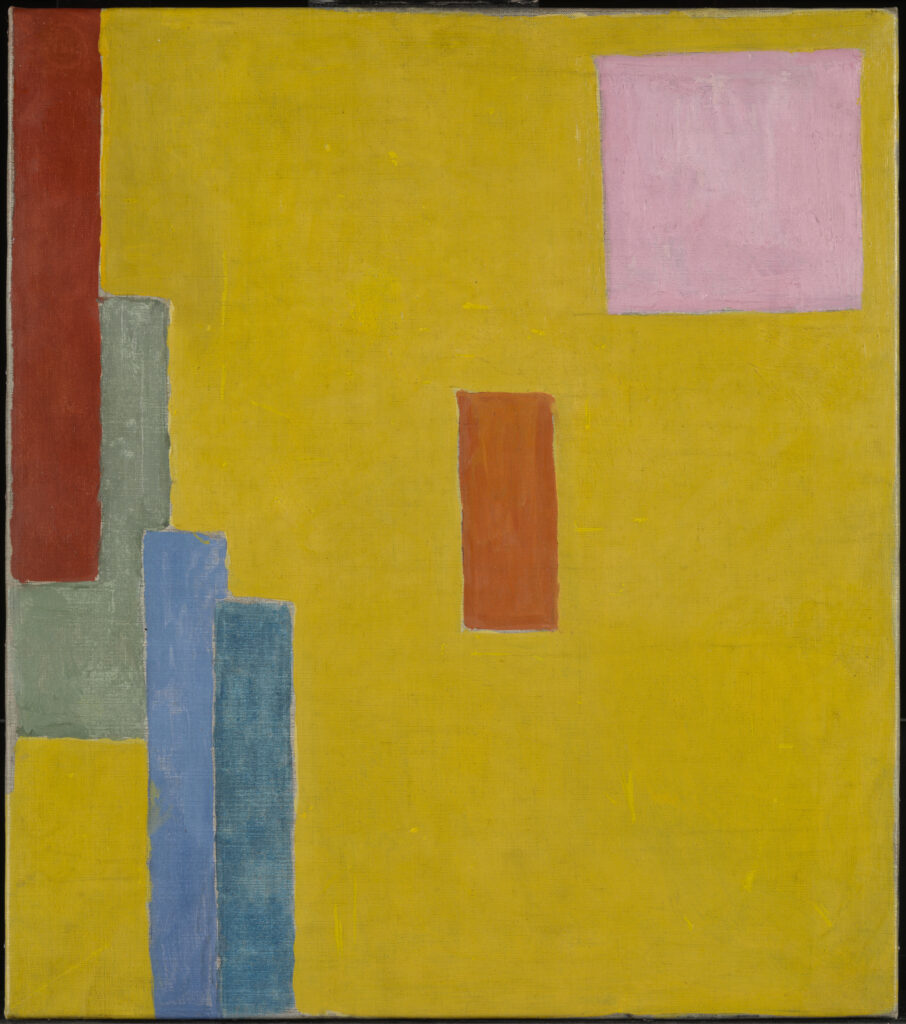
Vanessa Bell, Abstract Painting, c1914, Tate purchased 1974. © Estate of Vanessa Bell. All rights reserved, DACS 2024
This painting marks Bell’s boldest step into pure abstraction. In Britain, abstraction was still a radical notion; Bell was working in parallel to European pioneers like Kandinsky and Sonia Delaunay. This is emphasised by ensuring that no two colours meet, and a thin border of blank canvas is kept, creating tension across the picture. In 1923, Bell recalled how this abstract period of her career was dominated by ‘a great deal of excitement about colour… the rest of trying first to change everything into colour’. In this work, you can sense her excitement to push painting into new, uncharted territory.
-
-
-
Nursery Tea (c.1912)
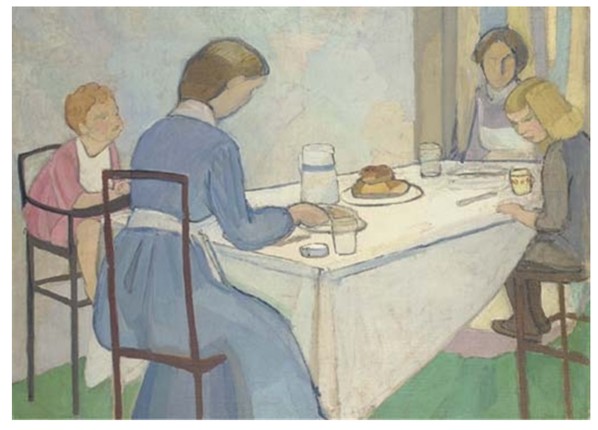
Vanessa Bell, Nursery Tea, c.1912 Private Collection.© Estate of Vanessa Bell. All rights reserved, DACS 2024
Domestic life was a rich subject for Bell, but she refused to follow tradition. Here, the scale is ambitious, the forms simplified almost to the point of collage. Her sons Julian and Quentin sit with their nursemaids, yet the figures feel secondary to her exploration of shape and hue. Her letter to Roger Fry about painting ‘as if I were mosaicing’ shows how she was applying cutting‑edge ideas – borrowed from Byzantine mosaics and contemporary post‑impressionism – to the intimate world of home. Rather than a gentle, sentimental image, she constructs the canvas like a mosaic, breaking forms into bold patches of colour.
-
-
Red Hot Pokers (1926)
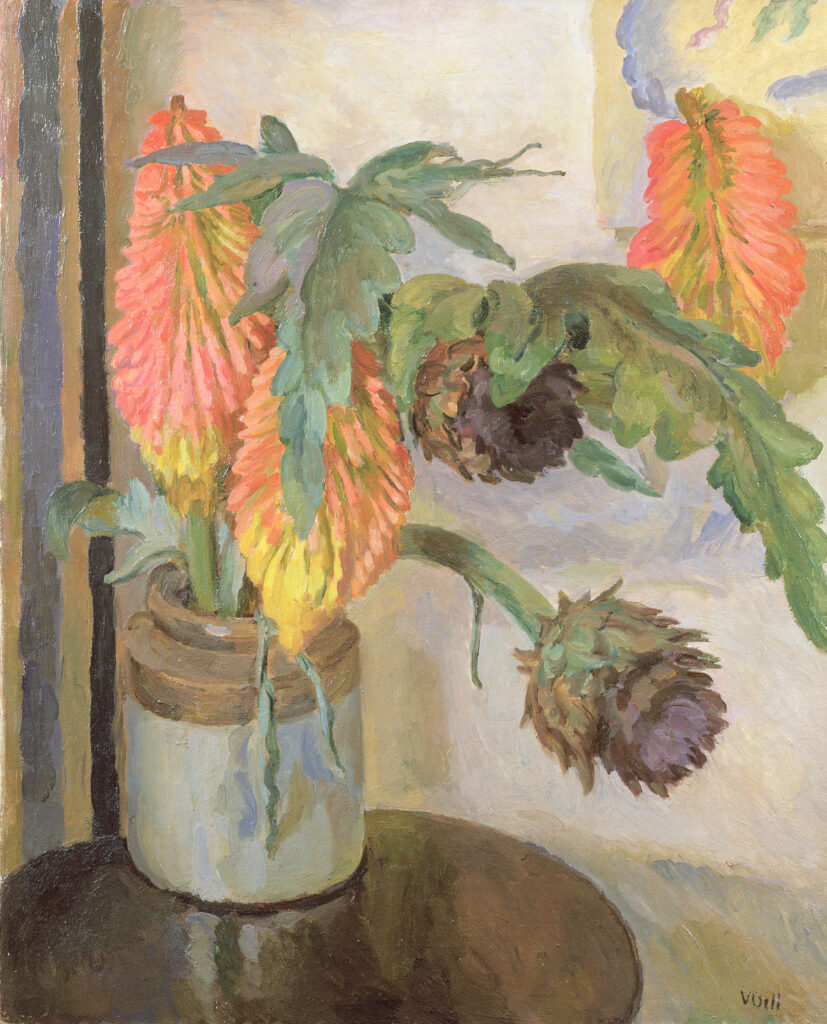
Vanessa Bell, Red Hot Pokers, 1926. private collection © Estate of Vanessa Bell. All rights reserved, DACS 2024.JPG
The gardens at Charleston were a constant source of artistic inspiration for Bell. In this still life, tall red flowers glow on the canvas. Her sister, Virginia Woolf, wrote that her mind ‘shivers with joy’ when she saw this painting, and it’s easy to see why. Bell takes something familiar – flowers from her own garden – and turns them into a celebration of colour and life.
-
Maud (1913)
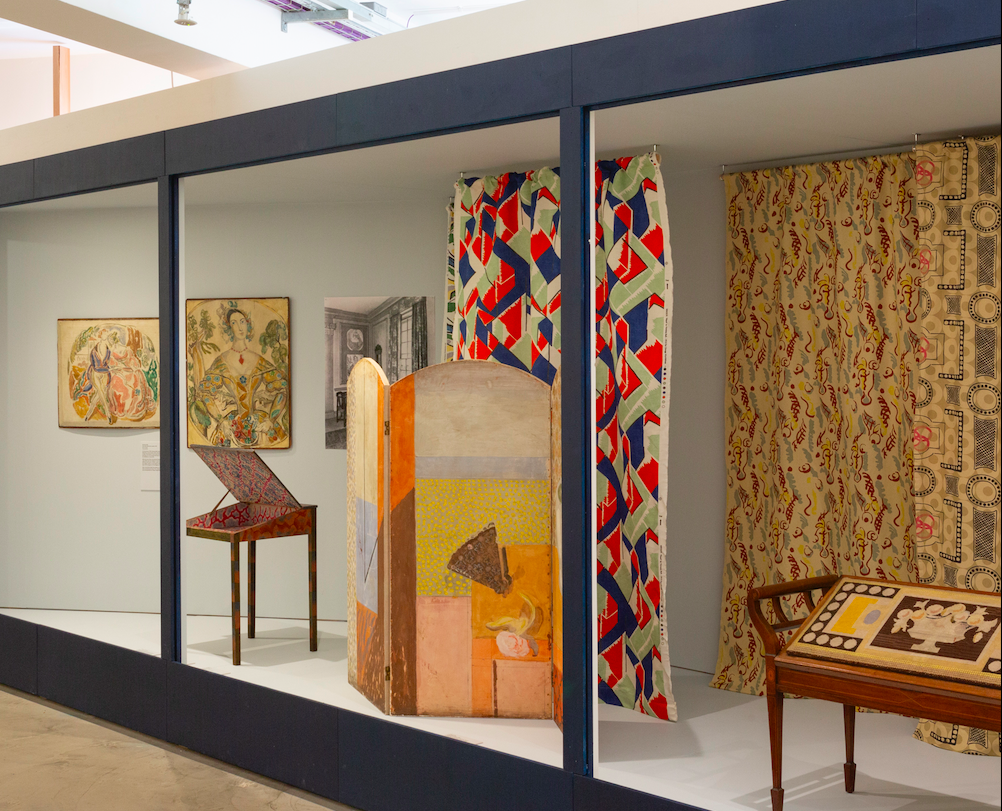
‘Vanessa Bell: A World of Form and Colour’ photographed by Lee Robbins
Bell’s creativity went far beyond the canvas. Her textiles for the Omega Workshops captured the vivid colours and bold geometry of European avant‑garde textiles. Her design ‘Maud’, created for the Omega Workshops, was so striking that artist Nina Hamnett recalled wearing it as a blouse to a dance in France: ‘No one in Paris had ever seen anything like it.’ It caused a sensation, signalling how fine art and fashion were beginning to merge.
You can take a piece of that history home: a reproduction of the Maud fabric is available exclusively in the Charleston shop.
From intimate portraits to radical designs, explore more than 100 works in ‘Vanessa Bell: A World of Form and Colour’, on view at Charleston in Lewes until 21 September 2025. Book your visit now.